Intelligent Hydraulics
Load-sensing pumps, pilot pressure stability and ISO 4406 cleanliness controls that hold breakout force through long dig cycles.
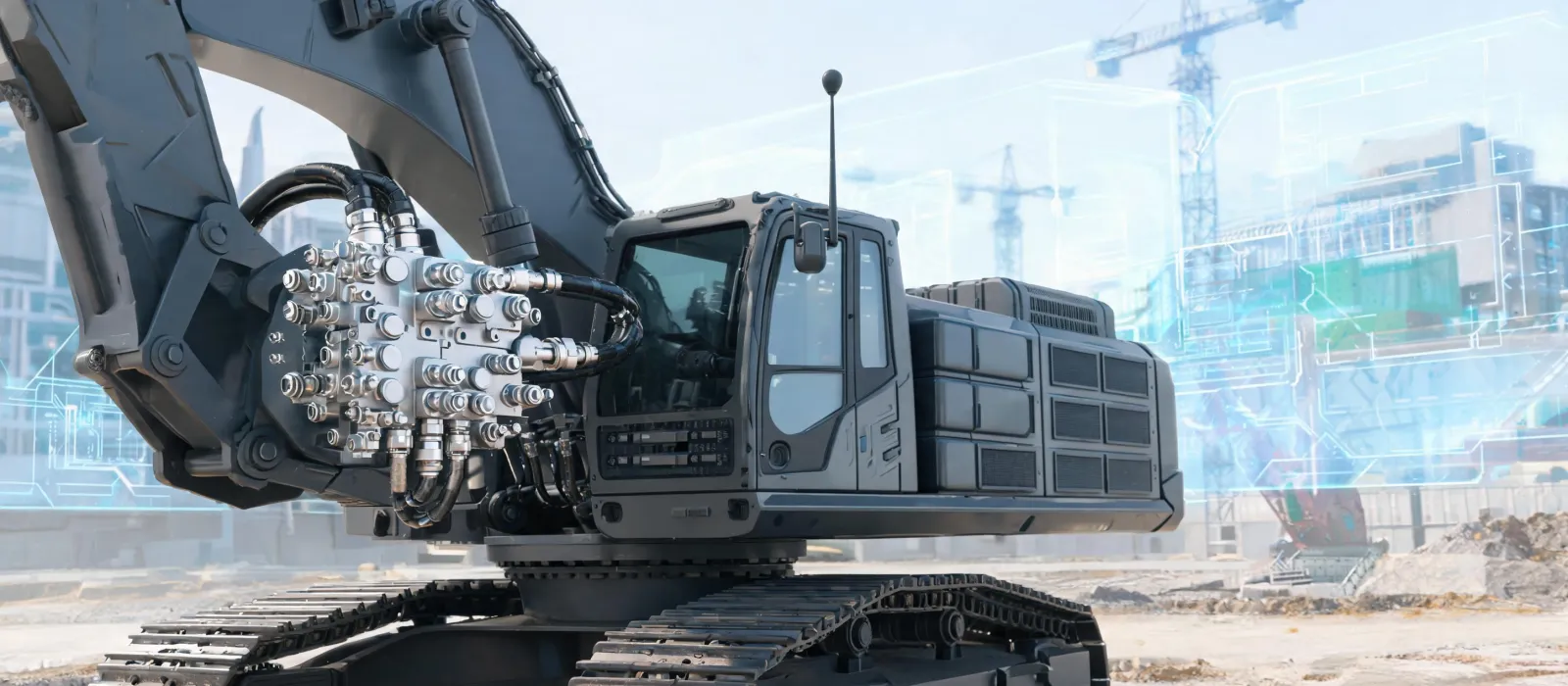
Research investment concentrates on intelligent hydraulic control, ISO 15143-3 remote monitoring and hybrid drivetrains that keep excavators productive while cutting fuel intensity on every cubic meter moved.
We commit to shipping excavators and loaders whose hydraulic, telematics and powertrain stacks are versioned, field-updatable and auditable — so fleet managers can prove uptime and energy intensity, not just claim them.
Load-sensing pumps, pilot pressure stability and ISO 4406 cleanliness controls that hold breakout force through long dig cycles.
ISO 15143-3 AEMP feeds, fault foresight and grease-cycle tuning streamed to the fleet office every thirty seconds.
Electric excavators and hybrid haulers with regenerative slew and gradeability-aware energy recovery on pit ramps.
Hydraulic research focuses on keeping main-pump response matched to bucket capacity changes without overshooting pilot pressure. Lab benches replay recorded dig cycles from clay, limestone and frozen silt so valve maps stay stable when operators change attachments mid-shift. Remote IoT work pairs CAN-bus signals with worksite geofences so a fleet manager sees which excavator is digging versus idling before fuel or battery energy is wasted. We also log hydraulic system pressure and slewing speed against operating weight so predictive models do not confuse a heavy boom set with a worn pump.
Hybrid powertrain trials measure gradeability on pit ramps and regenerative recovery during slew deceleration. Machines that spend long idle windows on urban trenches are stronger battery candidates; machines that climb steep ramps with heavy buckets often favor hybrid assist. Each path shares the same telematics contract so mixed fleets stay visible on one dashboard. Ground pressure and track shoe width remain part of the energy model because soft-fill sites change rolling resistance more than brochure duty cycles admit.
Technology credentials below are the gate checks EPCs ask for during technical scoring — CE Machinery Directive evidence, quality system audits and emissions packs sit beside the digital interface documents so software and iron are evaluated together. Where crawler excavators and wheeled excavators share a corridor bid, we publish both classes with identical ISO 4406 cleanliness targets so sampling SOPs do not fork mid-project.
Figures below are the VolvoBuild CE mid-class EX reference envelope for RFP scoring — not a substitute for a project-specific load chart.
| Parameter | Unit | Reference Value | Test / Source Note |
|---|---|---|---|
| Operating Weight | kg | 22,000 kg class | ISO 6016 machine mass with standard boom / arm / bucket |
| Bucket Capacity | m³ | 0.8–1.2 m³ | ISO 7451 struck capacity; attachment change alters cycle energy |
| Digging Depth | mm | 6,700 mm | Standard arm package; long-reach kits published separately |
| Breakout Force | kN | 142 kN | Bucket cylinder force at rated hydraulic system pressure |
| Hydraulic System Pressure | bar | 320 bar (32 MPa) | Main pump relief setting; ISO 4406 cleanliness target 18/16/13 |
| Ground Pressure | kPa | 46 kPa (600 mm shoe) | Soft-fill benches may require wider track shoe width |
| Engine Power | kW | 129 kW (173 hp) diesel / equivalent battery peak | ISO 9249 net; battery models publish continuous vs peak kW |
Not recommended when idle share exceeds ~30% of shift time or when pit ramps demand continuous high gradeability with heavy buckets — hybrid assist usually wins those duty cycles.
Not cost-optimal when daily paved-road travel would require float trailers more than twice per shift; wheeled excavators cut transport cost on urban corridor packages.
Not offered without surveyed geofences, radio redundancy and a written manned-excavator handoff protocol — incomplete radio maps are a hard stop, not a software toggle.
Application engineers also flag hydraulic system pressure claims when ISO 4406 samples are missing: without a recent particle count, we will not certify a valve-map update as the root fix. Ground pressure charts assume the published track shoe width; soft-fill sites that switch to narrower shoes must re-run the stability check before the first cut.
Procurement teams often ask which powertrain wins. The answer depends on energy price, idle share and emissions clauses — not a single brochure claim.
Lower operating energy cost on short-cycle urban trenches and night-shift quay work; regenerative slew recovers energy that diesel simply dumps as heat. Stronger when sites already budget scope-three CO2e and can host chargers between shifts.
Lower infrastructure investment and faster redeployment across remote borrow pits without grid access. Still the practical default when daily energy demand exceeds charger capacity or when machines climb steep gradeability ramps for most of the shift.
VolvoBuild CE publishes both paths with the same ISO 15143-3 AEMP contract so mixed fleets stay auditable. Field validation uses recorded dig cycles on the target material — clay, limestone or frozen silt — plus free sample hydraulic oil analysis and an application-engineer consultation before the purchase order locks the powertrain class.
Hydraulics maps, IoT data dictionary and hybrid duty-cycle worksheets for your next excavator fleet RFP.
Download Tech Brief