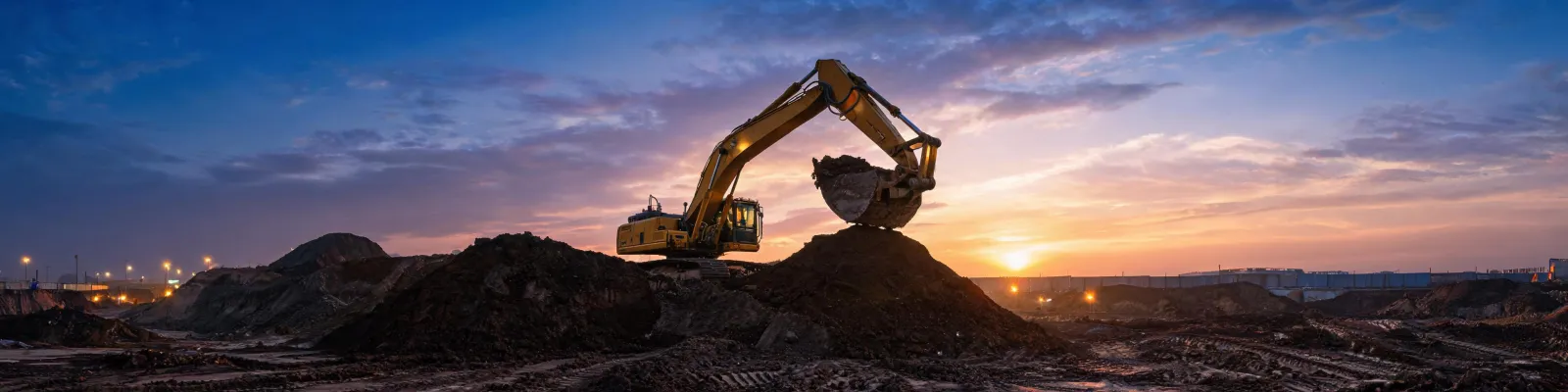
The email landed in my inbox on a Tuesday morning in March 2024. Subject line: URGENT — Need 3 buckets by Friday.
Our crew was wrapping up a site prep job for a retail development, and two of our backhoes were running with buckets so worn that the cutting edges looked like someone had taken a grinder to them. The third bucket had a cracked weld that our operator, Dave, had been nursing along for weeks.
I'm the office administrator for a 45-person excavation company. I manage everything from payroll to procurement—roughly $380,000 in annual purchasing across about a dozen vendors. When the operations manager says "we need buckets," I start making calls.
The Appeal of the Wholesale Quote
I started where I always start: our regular equipment dealer. They quoted us $2,100 per bucket for OEM backhoe buckets, with a 10-day lead time. That put us past the Friday deadline.
So I did what any cost-conscious admin would do. I Googled "excavator bucket wholesale" and started working through the results.
A supplier I'd never worked with before came back with a quote that made me sit up straight: $980 per bucket. Not refurbished. Not blemished. New, aftermarket, guaranteed to fit our machine models.
I ran the numbers. Three buckets from the dealer: $6,300. Three buckets from the wholesaler: $2,940. That's a difference of $3,360.
I felt pretty good about myself.
What the Quote Didn't Tell Me
The buckets arrived on Thursday—ahead of schedule. The fit was... close. Not perfect, but close. Our lead mechanic, Ray, had to spend about four hours modifying the mounting brackets on two of them.
"They'll work," he said. "But I'm not crazy about the steel thickness."
I logged the $3,360 savings in my vendor comparison spreadsheet and moved on.
Three weeks later, the first bucket failed. The cutting edge—which should have been hardened steel—had worn down to the point where it was basically a flat plate. On a job where we were digging through compacted gravel and clay, that bucket should have lasted months, not weeks.
Then the second one went. Same issue.
The third bucket lasted a little longer, but by then we'd already lost two days of production waiting on replacements. Our crew sat idle while I scrambled to find buckets that could actually handle the work.
I called our regular dealer back. They had three OEM buckets in stock at their regional warehouse. We paid full price and had them delivered the next morning.
Total cost of my "savings": $4,800 in lost production time, plus the $2,940 I'd already spent on the aftermarket buckets that were now scrap metal.
From the outside, it looked like I'd found a great deal on wholesale buckets. The reality was that I'd bought buckets designed for light-duty work and put them on machines running 10-hour days in abrasive soil.
What I Should Have Asked
The wholesale supplier wasn't lying to me. The buckets were new. They did fit. But here's what I didn't ask: What's the steel grade? What's the hardness rating? What's the warranty?
When I called the dealer back, their parts manager—a guy named Tom who's been doing this for 22 years—walked me through it. OEM buckets for our machine class use a specific grade of abrasion-resistant steel (he mentioned AR400, but I'd have to look up the exact spec). The aftermarket buckets I'd bought were probably built to a lower hardness standard because they were designed for general-purpose use, not the kind of work we do.
"You can buy a $900 bucket," Tom said. "But if you're digging in rock or compacted material all day, you're going to replace it three times a year. The $2,100 bucket might last you three years."
I did the math. He was right. The cheap bucket wasn't cheaper. It was just deferred cost.
The Broader Lesson About OEM vs. Aftermarket
I'm not saying aftermarket parts are always bad. That's not true. We run aftermarket filters and wear parts on our trucks without issue because those applications are less demanding.
But for high-wear items like excavator buckets and backhoe buckets—especially on machines that run full shifts in tough conditions—the specification matters. A backhoe bucket OEM part isn't just a commodity. It's engineered for a specific duty cycle.
What I've learned since then:
- Ask about steel grade and hardness. The wholesale supplier couldn't tell me. The dealer could.
- Match the bucket to the job. If you're doing light landscaping, a general-duty bucket might be fine. If you're doing site prep or trenching in compacted soil, you need a heavier spec.
- Calculate cost per hour, not cost per unit. The $2,100 bucket that lasts three years costs about $1.17 per operating hour (assuming 600 hours per year). The $980 bucket that lasts three months costs about $5.44 per operating hour.
That calculation changed how I think about procurement. I still look for savings, but I look for them in the right places—negotiating better terms with trusted suppliers, consolidating orders, timing purchases to catch seasonal promotions. I don't look for them by buying the cheapest version of a critical wear part.
Where This Fits Into the Backhoe Distributor Buying Guide
If you're sourcing buckets for a mixed fleet, whether through a backhoe distributor or a wholesale channel, here's the framework I use now:
- Document your duty cycle. What are you digging? How many hours per week? What's the abrasiveness of the material?
- Get specifications in writing. Don't just ask if it fits. Ask about steel grade, hardness, and warranty terms.
- Request a wear prediction. A good distributor can tell you approximately how many hours a bucket should last in your application.
- Compare total cost per hour, not sticker price. This is the number that matters.
- Start with one unit. Before you buy three buckets from a new supplier, buy one and run it for a month. See how it performs.
I wish I'd followed step five. It would have saved us almost $5,000.
The Electric Question
One thing I've noticed as we look at updating our fleet: more manufacturers are offering electric options for compact equipment. Volvo, for example, has been pushing electric compact excavators and wheel loaders. When I first heard about Volvo electric equipment, I assumed it was a niche product for indoor or noise-sensitive jobs.
But after doing some reading, I realized the appeal is broader. Electric motors have fewer moving parts, which means less maintenance. No diesel exhaust means you can run them in enclosed spaces or near air-quality-sensitive areas. And for compact machines doing short-cycle work, the battery range is usually sufficient for a full shift.
That said, they're not for every application. If you're running a 20-ton excavator 12 hours a day in a remote location with no charging infrastructure, electric probably isn't practical yet. But for urban jobs, indoor demolition, or landscaping work where noise and emissions matter, the calculus might be different.
I'm not ready to recommend a full electric fleet transition for a company like ours. But I am watching the space.
What I'd Tell Another Admin in My Position
If you're managing equipment procurement for a small-to-mid-size operation, here's the honest version of what I've learned:
This approach works for 80% of situations: Buying OEM buckets from a trusted distributor, paying the premium, and getting the support and warranty that comes with it.
Here's how to know if you're in the other 20%: If your machines only run light-duty work, if you have a reliable aftermarket supplier with documented specifications, or if you're willing to test one unit before committing to a fleet order.
I still kick myself for not asking those basic questions before placing that first order. The $3,360 I "saved" ended up costing us $4,800 in downtime and $2,940 in wasted parts. That's a $7,740 mistake I won't make again.
The cheapest bucket isn't the one with the lowest price. It's the one that does the job and lasts.

Charlotte Avery is an earth-moving machinery analyst covering excavators, mini excavators, loaders, skid steers, dozers, graders, compactors, and attachments. She uses ISO 6165 machine classification and ISO 20474-1 safety requirements while examining operating mass, rated payload, breakout force, ground pressure, stability, visibility, guarding, and attachment compatibility. Her work helps contractors and fleet buyers match machine size, undercarriage, transport limits, and protective features to terrain, duty cycle, and jobsite access.